Gay 兄弟: Bonds Beyond Blood in Japan’s LGBTQ+ Community
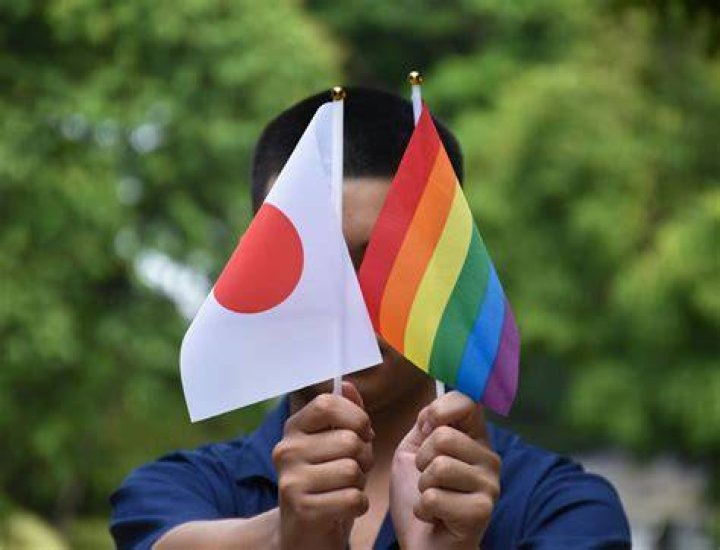
The term "gay 兄弟" carries a weight that goes far beyond a simple translation. In Japan, where traditional family structures often clash with individual identity, this phrase has evolved into a powerful symbol of chosen kinship. It’s not just about being gay. It’s about forging bonds that feel as strong, if not stronger, than blood ties.
Walk through Shinjuku Ni-chome, Tokyo’s legendary gay district, and you’ll hear it whispered in bars, shouted across crowded streets, and typed in dating app bios. "兄弟" (kyōdai) means brother. But when paired with "gay," it transforms. It speaks to a shared struggle, a mutual understanding, and a promise of loyalty that many LGBTQ+ individuals find hard to secure from their biological families.
What Does "Gay 兄弟" Really Mean?
At its core, "gay 兄弟" describes a relationship between gay men that transcends friendship. It’s a brotherhood built on shared experience. Think of it as a chosen family, a concept that resonates deeply in a society where coming out can still lead to rejection. These are the people who show up when you’re sick, who celebrate your victories, and who understand the unique pressures of navigating a heteronormative world.
But it’s not a one-size-fits-all label. For some, it’s a casual term of endearment between close friends. For others, it signifies a deep, platonic life partnership. And in certain contexts, it can even hint at a romantic or sexual connection, though that’s far from the rule. The beauty of the phrase lies in its flexibility. It’s a linguistic tool that allows gay men to define their own relationships on their own terms.
The Historical Roots of Chosen Brotherhood in Japan
Japan has a long, complicated history with same-sex relationships. Before the Meiji era, male-male love, particularly among samurai and monks, was documented and even romanticized. The concept of "shudō" (the way of the young man) involved mentorship and emotional bonds that often included physical intimacy. While not identical to modern "gay 兄弟," these historical precedents show that deep, non-familial male bonds have always existed.
Fast forward to the post-war period. The rise of gay bars and communities in the 1960s and 70s created spaces where men could find each other. In these early safe havens, the language of brotherhood began to take shape. It was a way to signal trust and solidarity in a world that was often hostile. The term "gay 兄弟" likely solidified in the 1990s and 2000s, as the internet allowed for wider networking and the formation of virtual support groups.
Why "Gay 兄弟" Matters More Than Ever
Japan’s LGBTQ+ landscape is shifting, but slowly. Same-sex marriage is not legally recognized nationwide, though some municipalities issue partnership certificates. Workplace discrimination, while illegal in some areas, remains a real threat. For many gay men, the fear of losing family support or facing social ostracism is a daily reality. In this environment, the "gay 兄弟" network becomes a lifeline.
Consider the story of Kenji, a 34-year-old office worker from Osaka. He came out to his parents at 25. It didn’t go well. "My mother cried for three days," he recalls. "My father stopped speaking to me for a year." Kenji found his footing through a local gay sports club. "The guys there became my 兄弟. They helped me find an apartment, they came to my birthday parties, they even helped me practice how to talk to my parents again." His story is not unique. It’s a common thread in the fabric of Japan’s gay community.
Digital Brotherhood: How Apps and Social Media Are Changing the Game
The internet has supercharged the concept of "gay 兄弟." Dating apps like Grindr and 9monsters are often seen as hookup tools, but they also serve as entry points into larger communities. Many users report forming lasting friendships that evolve into brotherhood. Dedicated LINE groups and Twitter communities allow gay men to share advice, job leads, and emotional support across vast distances.
One popular online space is the "Gay 兄弟 募集" (Gay Brothers Wanted) hashtag on X (formerly Twitter). Here, men post about their interests, their location, and what kind of brother they’re looking for. Some seek a mentor. Others want a workout partner. Many just want someone to talk to who gets it. The digital realm has democratized access to this chosen family, making it possible for men in rural areas, where physical gay spaces are scarce, to find their 兄弟.
The Unspoken Rules of Gay 兄弟 Relationships
Like any meaningful bond, the "gay 兄弟" relationship comes with its own set of expectations. Trust is paramount. Confidentiality is a must. In a society where outing someone can have devastating consequences, a true 兄弟 never reveals a secret. There’s also an unspoken code of mutual support. If your 兄弟 is struggling financially, you help. If he’s heartbroken, you listen. If he’s facing discrimination, you stand with him.
Jealousy can sometimes creep in, especially when romantic partners enter the picture. Navigating the line between a platonic brother and a boyfriend requires emotional intelligence. But many couples report that their partner’s "gay 兄弟" network actually strengthens their relationship. It provides a support system that reduces the pressure on the romantic partnership to fulfill all emotional needs.
Generational Differences: A Tale of Two Japans
Older gay men in Japan often remember a time when the term "gay 兄弟" was used more cautiously. In the 1980s and 90s, being openly gay could cost you your job, your family, and your safety. Brotherhood was a quiet, underground affair. Meetings happened in discreet bars. Phone calls were made from payphones. The bond was intense but hidden.
Younger generations, particularly those in their 20s, have a different experience. They grew up with more media representation, from manga like "Boys’ Love" to TV dramas featuring gay characters. They are more likely to be out to friends, if not family. For them, "gay 兄弟" is less about survival and more about celebration. It’s about finding people who share your taste in music, your fashion sense, and your dreams for the future. Yet, even for the most progressive young men, the shadow of societal pressure remains. The need for a brother who truly understands never fully disappears.
Beyond Tokyo: Gay 兄弟 in Rural Japan
Life for a gay man in a small town in Hokkaido or a fishing village in Kyushu is vastly different from life in Tokyo or Osaka. Isolation is a major issue. There are no gay bars. No pride parades. The nearest support group might be hours away. In these environments, the "gay 兄弟" concept takes on an almost heroic quality. A single connection can be transformative.
Online communities become the primary lifeline. A man in rural Yamagata might have a 兄弟 he’s never met in person, but with whom he talks every day. They share photos of their gardens, complain about work, and offer advice on how to handle nosy neighbors. When they finally meet, perhaps at a city pride event, the emotion is overwhelming. "It felt like meeting a brother I’d been separated from at birth," one man told us. These long-distance bonds are a testament to the human need for connection, and the unique role that "gay 兄弟" plays in fulfilling it.
The Intersection of Gay 兄弟 and Mental Health
Mental health is a critical, often unspoken, aspect of the "gay 兄弟" dynamic. Studies consistently show that LGBTQ+ individuals face higher rates of depression, anxiety, and suicidal ideation, often linked to minority stress. Having a strong support network is one of the most effective protective factors. The "gay 兄弟" network provides exactly that.
It’s not therapy, of course. But it’s a form of peer support that can be incredibly effective. A 兄弟 can recognize the signs of a depressive episode before anyone else. He can gently encourage a friend to seek professional help. He can simply sit in silence when words fail. In a country where mental health stigma is still significant, especially among men, this informal support system saves lives.
How to Find Your Own Gay 兄弟 in Japan
For those new to Japan or newly out, finding a "gay 兄弟" can feel daunting. But the pathways are clearer than they might seem. Start with physical spaces. Ni-chome in Tokyo, Doyama-cho in Osaka, and Yakuin in Fukuoka are hubs. Go to a bar, join a community event, or volunteer at an LGBTQ+ organization. The key is to be present and open.
Online, platforms like the "Gay 兄弟" groups on Facebook or dedicated servers on Discord are excellent starting points. Be honest about what you’re looking for. Are you seeking a mentor? A friend to explore the city with? Someone to talk to about coming out? Clarity attracts the right connections. And remember, building a brotherhood takes time. It’s not a transaction. It’s a relationship that grows through shared experiences, trust, and mutual vulnerability.
The Future of Gay 兄弟 in Japan
As Japan slowly moves toward greater legal and social acceptance of LGBTQ+ people, the role of "gay 兄弟" may evolve. Some worry that as mainstream acceptance grows, the need for such intense, chosen family bonds might diminish. But most believe the opposite. "Even if marriage equality comes tomorrow, we will still need our 兄弟," says Taro, a 29-year-old activist. "Society can change laws, but it can’t instantly erase decades of trauma and isolation. The brotherhood is about healing, and that’s a lifelong process."
The term itself may also continue to shift. Younger generations are already using it more fluidly, sometimes including non-binary and trans individuals within the "兄弟" circle. The core meaning, however, remains constant: a bond of love, loyalty, and understanding that defies biology and social convention.
Conclusion: More Than a Word
"Gay 兄弟" is not just a phrase. It’s a declaration of intent. It’s a promise to be there, through the good and the bad. In a country where the path for gay men can be lonely and fraught with obstacles, these chosen brothers light the way. They are the family you find, not the one you’re born into. And for countless men across Japan, that makes all the difference.
Whether you’re a gay man living in Tokyo, a foreigner exploring the community, or simply someone curious about the power of human connection, the story of "gay 兄弟" is a reminder that family is not defined by blood. It’s defined by love, respect, and the unwavering commitment to stand by each other. And that is a story worth telling.